
Schedule a Free Consultation  972-905-2170

What Evidence Helps Prove a Good-Faith Marriage in Immigration Cases?
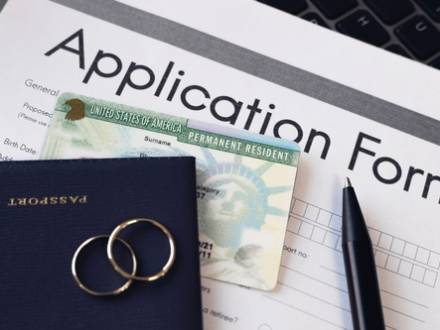 The strongest evidence of a good-faith marriage is documentation that shows you and your spouse have actually built a life together. Things like shared finances, a joint lease, photos, and communication records all go a long way.
Marriage-based green cards make up the largest category of lawful permanent resident admissions each year, which means USCIS officers review these cases constantly and know what to look for when deciding whether a relationship is genuine or raises questions. If you are going through this process in 2026, a Dallas immigration lawyer can help you understand what evidence applies to your specific situation and how to present it clearly.
What Does "Good Faith" Mean in a Marriage-Based Immigration Case?
Good faith simply means you got married because you genuinely wanted to be together rather than for immigration benefits. USCIS does not expect your marriage to be perfect or your relationship to look a certain way. What they do expect is proof that your marriage was real from the beginning.
Under 8 U.S.C. Section 1186a, recently married couples where one spouse is a foreign national may be required to show that the marriage was entered in good faith when applying to remove conditions on permanent residence. If USCIS believes the marriage was entered only for immigration purposes, the foreign spouse can be denied a green card or, if already approved, can have that status taken away.
What Financial Documents Help Prove a Good-Faith Marriage?
Shared finances are some of the most convincing evidence you can submit. They show that you and your spouse are financially tied to each other the way real couples are.
Useful financial documents include:
- Joint bank account statements showing regular shared activity
- Joint tax returns filed together
- A lease or mortgage with both names on it
- Shared utility bills, car insurance, or credit card accounts
- Life insurance policies that list your spouse as the beneficiary
You do not need all of these. Even a few consistent records can paint a clear picture of a shared life.
What Personal Evidence Shows That a Marriage Is Real?
Financial records alone are not always enough. USCIS also wants to see that your relationship exists beyond shared accounts. Personal evidence helps fill in that picture.
Photos are one of the simplest and most effective forms of proof. Include pictures from different stages of your relationship, holidays, family gatherings, and everyday moments. Avoid submitting only posed or formal photos. Candid pictures with friends and family tend to carry more weight because they show your relationship in a natural setting.
Communication records also help. Printed text message conversations, emails, or call logs showing regular contact over time can demonstrate that you and your spouse have an ongoing, active relationship. This is especially useful for couples who have spent time apart due to work or immigration circumstances.
Can Statements from Family and Friends Help Your Good-Faith Marriage Case?
Affidavits, which are written statements signed under oath, from people who know you as a couple, can support your case meaningfully. These statements should come from people who have spent time with you together and can speak to specific details about your relationship.
A strong affidavit does not just say "they are a great couple." It describes things like how you met, shared experiences the person witnessed, and how your relationship has developed over time. Generic statements do not carry much weight. Specific, personal observations do.
What Happens During a USCIS Marriage Interview?
Most marriage-based green card applicants go through an interview at a USCIS field office. In the Dallas area, this typically takes place at the USCIS Dallas Field Office. During the interview, an officer will ask both spouses questions about their relationship and daily life together.
Officers are trained to identify inconsistencies. They may ask about things like the layout of your home, your spouse's daily routine, where you celebrated your last anniversary, or what you did last weekend. The questions can feel surprisingly personal or specific, and that is intentional.
Under 8 C.F.R. Section 216.4, USCIS may require additional questioning or a separate interview if there are concerns. Preparing for this interview carefully is one of the most important things you can do before your appointment.
What If Your Marriage Looks Unconventional?
Not every marriage fits a traditional mold, but USCIS does not need it to. Couples who met online, had a short courtship, come from different cultural backgrounds, or have a significant age difference are not automatically suspected of fraud. What matters is that you can show the relationship is genuine.
If your situation has features that might seem unusual to an officer, address them directly. A brief written explanation included in your filing can help frame your story before the officer forms any assumptions. Trying to hide or minimize those details tends to backfire.
Schedule a Free Consultation With Our Plano, TX Family-Based Immigration Attorney
Proving a good-faith marriage to USCIS takes preparation, the right documentation, and a clear understanding of what officers are actually looking for. Attorney Jae Lee knows this process from more than a professional perspective. His own parents went through the immigration process, and that experience shapes the way he approaches every case. When you work with him, you work directly with Jae, not a case manager or a paralegal. He offers one-on-one guidance from start to finish and can work with you remotely, no matter where you are located. If you are ready to move forward, contact the Dallas immigration attorney at Law Office of Jae Lee by calling 214-799-5062.


From our offices in Dallas and Plano, Texas, we serve clients throughout the surrounding areas including Fort Worth, Irving, Arlington, Farmers Branch, Frisco, Carrollton, Garland, Addison, Richardson, Allen, Murphy, Wylie, McKinney, Dallas County, Collin County, Denton County, and all of Northeastern Texas.
Results listed are not a guarantee or indication of future case results.
Contact Our Firm
 The use of the Internet or this form for communication with the firm or any individual member of the firm does not establish an attorney-client relationship. Confidential or time-sensitive information should not be sent through this form.
I have read and understand the Disclaimer and Privacy Policy.