
Schedule a Free Consultation  972-905-2170

What Are the Requirements for Sponsoring Family Members for Immigration?
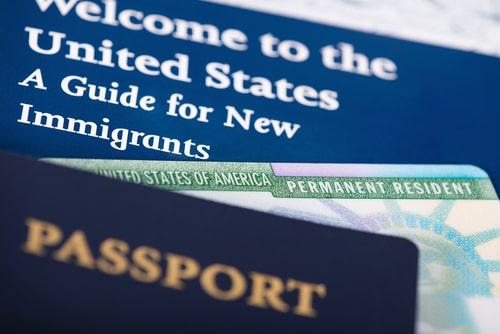 Sponsoring a family member for immigration means accepting a legal obligation to support them financially while helping them navigate a process that can take months or even years. The basic requirements include being a U.S. citizen or green card holder, meeting income limits, and filing the right paperwork in the right order. If you are thinking about sponsoring a family member in 2026, a Plano, TX immigration lawyer can walk you through what is required right now and help you avoid mistakes that could slow things down.
Who Can Sponsor a Family Member for Immigration?
To sponsor a family member, you must be either a U.S. citizen or a lawful permanent resident, which means a green card holder. Your status determines which family members you can sponsor and how quickly the process can move.
U.S. citizens can sponsor more family members than green card holders can. Citizens can petition for a spouse, children, parents, and siblings. Green card holders can only petition for a spouse and unmarried children. The relationship between you and your family member also affects how long they may have to wait for a visa.
What Is the Difference Between Immediate Relatives and Preference Categories?
Immediate relatives of U.S. citizens include spouses, unmarried children under 21, and parents. This group is not subject to annual visa limits. That means they do not have to wait for a visa number to become available after the petition is approved, which generally makes the process faster than it is for preference-category applicants.
All other family relationships fall into preference categories. The preference categories are:
- F1: Unmarried adult children of U.S. citizens
- F2A: Spouses and unmarried children under 21 of green card holders
- F2B: Unmarried adult children of green card holders
- F3: Married children of U.S. citizens
- F4: Siblings of adult U.S. citizens
These have annual limits on how many visas can be issued each year, which creates backlogs. Some categories have wait times of several years, depending on the country where the person being sponsored was born.
What Forms Do You Need to File?
The process starts with filing a petition with U.S. Citizenship and Immigration Services. The main form is Form I-130, the Petition for Alien Relative. This form shows the relationship between you and the family member you want to sponsor.
Filing Form I-130 does not bring your family member to the United States on its own. It is just the first step. Once the petition is approved, more steps follow depending on whether your family member is already in the U.S. or living in another country.
If your family member is abroad, the case moves to the National Visa Center and then to a U.S. consulate for an interview. If your family member is already in the U.S. and qualifies, they may be able to file Form I-485 to apply for a green card without leaving the country.
What Are the Financial Requirements for Sponsoring a Family Member?
You have to show that you can financially support the person you are sponsoring. Under 8 U.S.C. Section 1183a, sponsors must file Form I-864, the Affidavit of Support. This is a legally binding promise to support your family member at a level above the federal poverty guidelines.
As of 2026, your household income generally needs to be at least 125 percent of the federal poverty guideline for your household size. That calculation includes the family member you are sponsoring. If your income is not high enough, you may be able to use assets to make up the difference or find a joint sponsor who meets the income requirement.
The Affidavit of Support stays in effect until the sponsored person becomes a U.S. citizen, works in the U.S. for 40 qualifying quarters, leaves the country permanently, or passes away. In some situations, a government agency that provides certain means-tested public benefits may seek reimbursement from the sponsor.
What Happens After an I-130 Form Is Approved?
Once Form I-130 is approved, what comes next depends on whether a visa number is available for your family member's category. For immediate relatives of U.S. citizens, a visa is ready right away. For preference categories, there may be a wait until a visa number opens up based on when the petition was originally filed.
When a visa number becomes available, the case moves forward through either a consulate interview abroad or an adjustment of status process in the U.S. Both paths involve more forms, a medical exam, background checks, and an interview before a final decision is made.
Under 8 U.S.C. Section 1153, federal law sets how many visas are available in each category each year. That is why wait times can be so different depending on the relationship and the country of birth.
What Are the Most Common Reasons Applications Are Delayed or Denied?
Missing documents, errors on forms, and not enough income documentation cause many delays. Failing to respond to a request for more evidence can also slow things down or lead to a denial. A denial can happen if the relationship cannot be proven, if the sponsor does not meet the financial requirements, or if the person being sponsored has something in their background that makes them ineligible. Preparing carefully from the start can prevent many of these problems.
Schedule a Free Consultation With Our Dallas, TX Family-Based Immigration Attorney
Bringing a family member to the United States is a meaningful but sometimes arduous process. Attorney Jae Lee understands this process from more than a professional standpoint. His own parents went through the immigration process, and that experience shapes the way he works with every family he helps. You will work directly with Jae from start to finish, not a case manager or paralegal. He also works with clients remotely, so no matter where you are, you can get the personal, one-on-one guidance your case deserves. Contact a Plano, TX immigration lawyer at Law Office of Jae Lee by calling 214-799-5062 to get started today.


From our offices in Dallas and Plano, Texas, we serve clients throughout the surrounding areas including Fort Worth, Irving, Arlington, Farmers Branch, Frisco, Carrollton, Garland, Addison, Richardson, Allen, Murphy, Wylie, McKinney, Dallas County, Collin County, Denton County, and all of Northeastern Texas.
Results listed are not a guarantee or indication of future case results.
Contact Our Firm
 The use of the Internet or this form for communication with the firm or any individual member of the firm does not establish an attorney-client relationship. Confidential or time-sensitive information should not be sent through this form.
I have read and understand the Disclaimer and Privacy Policy.