
Schedule a Free Consultation  972-905-2170

How Can I Remove Conditions From My Green Card?
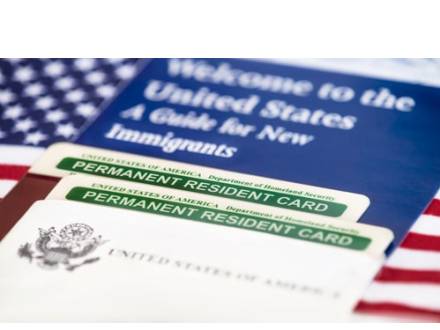
A green card lets you live and work in the United States as a permanent resident. But some green cards issued through marriage come with conditions that you’ll need to remove in order to keep your permanent resident status. If you are filing jointly with your spouse, you can remove conditions from a green card by filing Form I-751 with USCIS. Most couples file jointly. You’ll need to show that your marriage was genuine and that you did not marry just to get a green card.
If your marriage ended, if you experienced abuse, or if your spouse has passed away, you could qualify to file on your own. However, a spouse's refusal to cooperate alone doesn’t qualify you for a waiver. Our Plano, TX immigration attorney can help you prepare a 2026 petition to give you a better chance at removing conditions.
Why Do Some U.S. Green Cards Have Conditions?
Conditional permanent residence applies when you obtained your green card through a marriage that was less than two years old on the date you became a permanent resident.
Congress created this category to address marriage fraud, and the rules appear in 8 U.S.C. § 1186a. Under this law, you receive conditional permanent residence and must file a joint petition to remove the conditions. Different filing rules apply to individual petitions and waivers.
When Do You File Form I-751 to Remove Conditions From a Green Card?
The filing window for a joint petition opens 90 days before your conditional card expires and closes on the expiration date itself. Filing a joint petition early is not possible. A joint petition submitted before that window opens will be rejected and returned.
Filing a joint petition late is possible but requires an explanation. USCIS can accept a late petition if you explain the circumstances that caused the delay and show a good reason for filing late. USCIS does not have to accept a late petition. If you do not file at all, you could lose your status and face deportation proceedings.
Waiver petitions work differently on timing. If you are filing alone based on divorce, abuse, or extreme hardship, you may file at any point after obtaining conditional status rather than waiting for the 90-day window.
After you properly file, USCIS issues a receipt notice extending your conditional card’s validity for 48 months beyond its expiration date while your petition is pending. Keep that notice with your card. Together, they prove your status and allow you to continue working and traveling during that extension.
What Evidence Proves a Bona Fide Marriage for a Green Card Condition Removal?
USCIS evaluates whether you built a life together, not whether a wedding occurred. The agency considers different types of evidence showing that your marriage was genuine, including:
- A joint lease, mortgage, or deed
- Joint bank accounts, credit cards, and loans
- Joint federal tax returns for each year of the marriage
- Insurance policies naming each other as beneficiary
- Birth certificates of children you share
- Utility bills and accounts in both names
- Photographs spanning the length of the relationship
- Travel records and trips taken together
- Sworn statements from people who know you both
A joint lease and several years of joint tax returns may provide stronger evidence than photographs alone. Couples who kept finances separate, which is increasingly common, should explain why and supply whatever other evidence exists.
What Happens After You File Form I-751 to Remove Conditions From Your Green Card?
USCIS reviews the petition and can approve it based on your documents without an interview. The agency can also schedule an appointment to collect your fingerprints and photo or reuse records it already has on file. If an appointment is required, you will receive a notice with the details.
If the officer needs more, you will receive a request for evidence specifying what is missing. Those carry strict response deadlines, and a late response can result in denial.
Some cases are scheduled for an interview, particularly waiver petitions and cases where the evidence raised questions. Both spouses attend a joint petition interview. Officers may question you separately about daily life before comparing answers.
A denial does not necessarily end your case. If USCIS denies the petition and begins removal proceedings, you can ask an immigration judge to review the denial. The judge can review the decision independently.
Contact a Dallas, TX Immigration Lawyer for a Free Consultation Today
Attorney Jae Lee works with clients directly, one-on-one, rather than handing a case off to staff. His own parents went through the immigration process, so the waiting, the paperwork, and the worry that comes with a family’s status being uncertain are familiar to him personally. He also works with clients remotely, which means you can get real guidance regardless of where you are during the process.
Contact Law Office of Jae Lee at 214-799-5062 to talk to our Plano, TX immigration attorney today.


From our offices in Dallas and Plano, Texas, we serve clients throughout the surrounding areas including Fort Worth, Irving, Arlington, Farmers Branch, Frisco, Carrollton, Garland, Addison, Richardson, Allen, Murphy, Wylie, McKinney, Dallas County, Collin County, Denton County, and all of Northeastern Texas.
Results listed are not a guarantee or indication of future case results.
Contact Our Firm
 The use of the Internet or this form for communication with the firm or any individual member of the firm does not establish an attorney-client relationship. Confidential or time-sensitive information should not be sent through this form.
I have read and understand the Disclaimer and Privacy Policy.